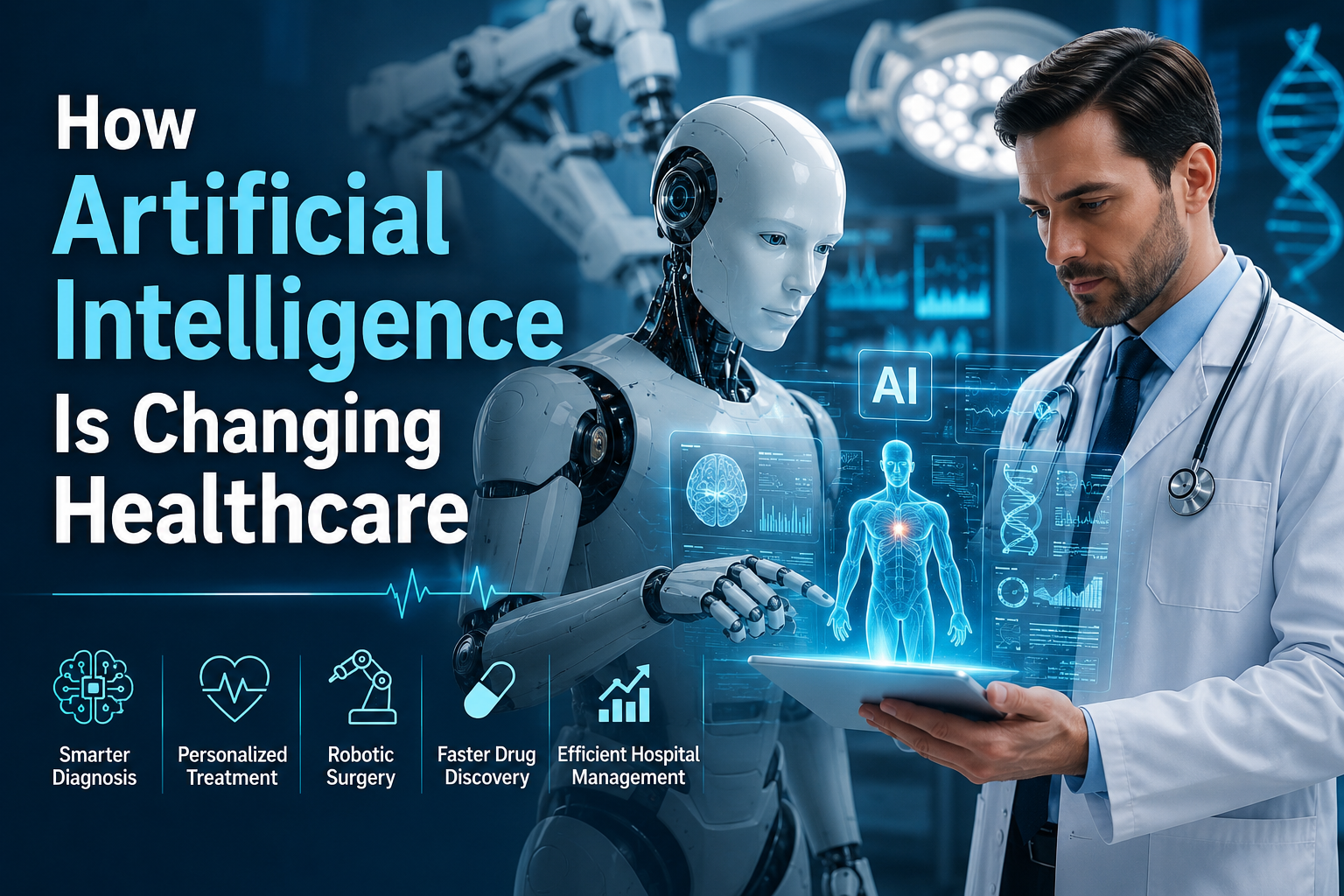
Artificial Intelligence has become one of the most transformative technologies in modern healthcare. Hospitals, research centers, and healthcare companies around the world are increasingly using AI-powered systems to improve diagnosis, patient care, medical research, and hospital management. As technology continues to evolve, Artificial Intelligence is helping healthcare professionals make faster decisions, improve treatment accuracy, and enhance patient outcomes.
In 2026, AI is playing a major role in reshaping the healthcare industry through automation, data analysis, and advanced medical technologies.
AI in Medical Diagnosis
One of the most important applications of Artificial Intelligence in healthcare is medical diagnosis. AI systems can analyze large amounts of medical data, including X-rays, MRI scans, and laboratory reports, to help doctors identify diseases more accurately.
AI-powered imaging systems are now being used to detect conditions such as cancer, heart disease, and neurological disorders at earlier stages. Early diagnosis often improves treatment success and patient survival rates.
AI in Personalized Treatment
Artificial Intelligence is also improving personalized medicine. AI systems analyze patient data, genetics, and medical history to help doctors create customized treatment plans. This approach allows healthcare providers to recommend treatments that are more effective for individual patients.
Personalized treatment is becoming increasingly important in cancer care, chronic disease management, and precision medicine.
Robotic Surgery and AI-Assisted Procedures
AI-powered robotic systems are changing modern surgery. Surgeons now use robotic technologies to perform minimally invasive procedures with greater precision and control. These systems help reduce surgical errors, improve accuracy, and shorten patient recovery times.
Robotic-assisted surgery is widely used in areas such as cardiology, neurosurgery, and orthopedic procedures.
AI in Drug Discovery and Medical Research
Developing new medicines traditionally requires years of research and testing. Artificial Intelligence is helping pharmaceutical companies accelerate this process by analyzing large datasets and identifying potential drug compounds more efficiently.
AI is also being used in medical research to study diseases, predict treatment outcomes, and improve clinical trial processes.
Virtual Health Assistants and Chatbots
Healthcare providers are increasingly using AI-powered virtual assistants and chatbots to improve patient communication. These systems help patients schedule appointments, receive medication reminders, and access basic medical information.
Virtual assistants can also reduce administrative workloads for healthcare staff, allowing doctors and nurses to focus more on patient care.
AI in Hospital Management
Artificial Intelligence is helping hospitals improve operational efficiency. AI systems can manage patient scheduling, predict hospital resource needs, and optimize staff allocation. These technologies help reduce waiting times and improve the overall patient experience.
Hospitals also use AI to monitor patient conditions in real time and detect potential medical emergencies more quickly.
Benefits of AI in Healthcare
Artificial Intelligence offers several important advantages in healthcare.
Improved diagnostic accuracy
Faster treatment planning
Enhanced patient monitoring
Reduced medical errors
More efficient hospital operations
Faster medical research and drug development
These benefits help healthcare systems provide safer and more effective medical services.
Challenges and Ethical Concerns
Despite its advantages, AI in healthcare also presents challenges. Data privacy and patient security remain major concerns because AI systems rely heavily on medical data. There are also ethical questions regarding decision-making, transparency, and the role of automation in patient care.
Healthcare organizations must ensure that AI technologies are used responsibly and safely.
Conclusion
Artificial Intelligence is rapidly transforming healthcare by improving diagnosis, treatment, surgery, and hospital management. AI-powered technologies are helping doctors provide more accurate and personalized care while increasing efficiency across healthcare systems. As innovation continues, Artificial Intelligence is expected to play an even greater role in shaping the future of global healthcare.
FAQs
- How is Artificial Intelligence used in healthcare?
AI is used for diagnosis, robotic surgery, personalized treatment, hospital management, and medical research. - Can AI replace doctors in the future?
AI can assist doctors and improve efficiency, but human medical expertise and patient care remain essential. - What are the benefits of AI in healthcare?
AI improves diagnosis accuracy, reduces medical errors, speeds up research, and enhances patient care. - Is AI safe in healthcare?
AI technologies can be safe when properly regulated and used under medical supervision with strong data security measures.



Be First to Comment