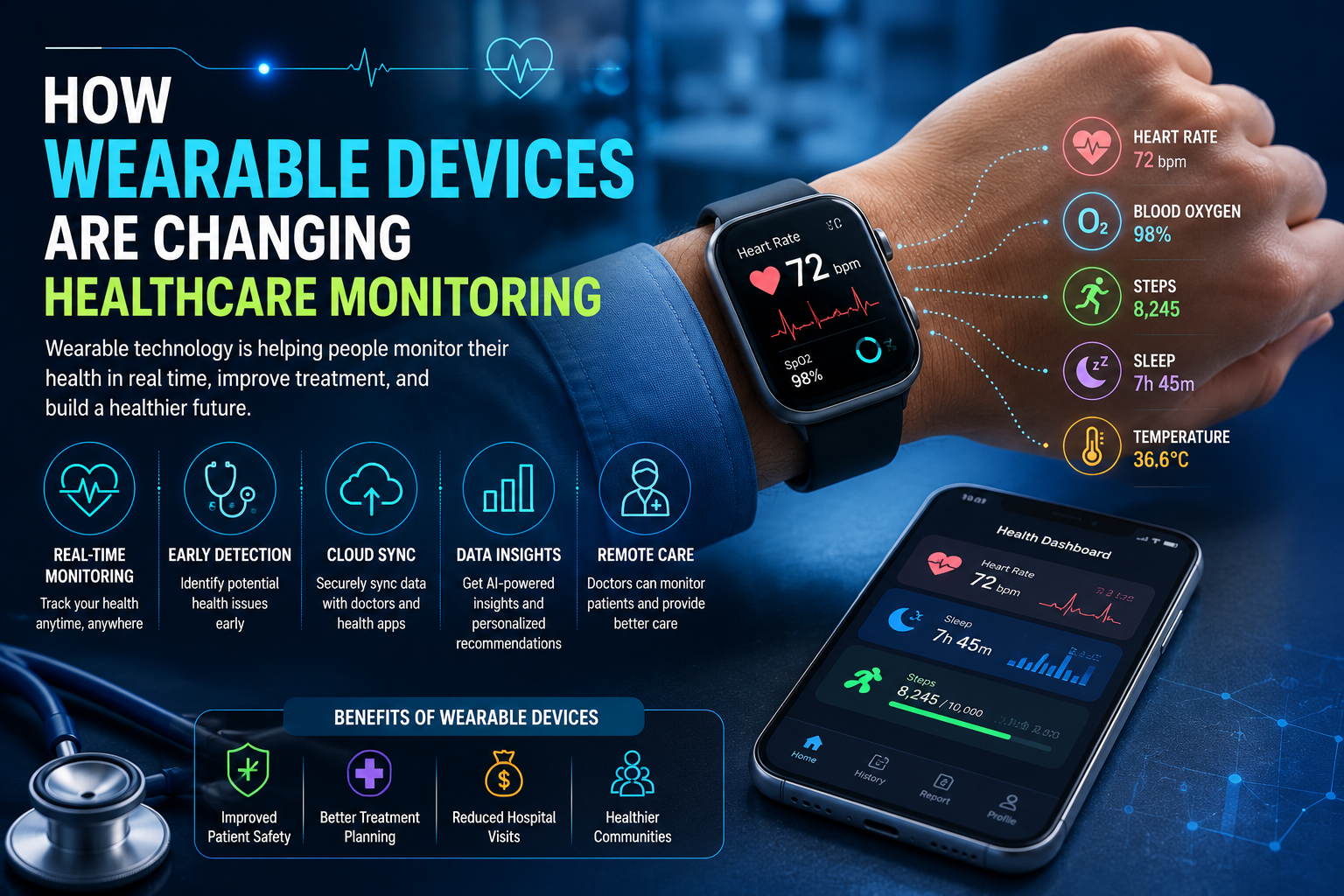
Wearable technology has become one of the fastest-growing innovations in modern healthcare. Devices such as smartwatches, fitness trackers, and health-monitoring sensors are helping individuals track important health information in real time. These technologies are transforming healthcare monitoring by improving disease prevention, patient management, and early diagnosis.
In 2026, wearable devices will become increasingly advanced, offering features that allow healthcare professionals and patients to monitor health conditions more efficiently than ever before.
What Are Wearable Healthcare Devices?
Wearable healthcare devices are electronic technologies designed to collect and monitor health-related data while being worn on the body. These devices can track heart rate, blood pressure, sleep patterns, oxygen levels, physical activity, and other important health indicators.
Modern wearable devices are often connected to smartphones or cloud-based systems, allowing users and healthcare providers to access health data instantly.
Real-Time Health Monitoring
One of the biggest advantages of wearable devices is real-time health monitoring. Traditional health checkups usually occur only during medical appointments, but wearable technology continuously collects health data throughout the day.
Patients with chronic conditions such as heart disease or diabetes can use wearable devices to monitor their health more closely and identify potential problems early.
Improved Heart Health Monitoring
Many wearable devices now include advanced heart-monitoring features. Smartwatches can track heart rate, detect irregular heart rhythms, and monitor blood oxygen levels. Some devices can even alert users to potential heart-related issues before symptoms become severe.
These technologies are helping healthcare professionals detect cardiovascular problems earlier and improve patient care.
Better Management of Chronic Diseases
Wearable technology is playing a major role in chronic disease management. Patients with diabetes can use continuous glucose monitoring systems to track blood sugar levels without repeated finger-prick tests.
Wearable sensors also help patients with respiratory diseases, hypertension, and sleep disorders monitor their conditions more effectively from home.
Support for Fitness and Preventive Healthcare
Fitness trackers encourage healthier lifestyles by monitoring physical activity, calorie consumption, and exercise performance. Many people use wearable devices to improve fitness, maintain healthy habits, and reduce health risks.
Preventive healthcare is becoming increasingly important, and wearable technology helps users stay aware of their health status daily.
Remote Patient Monitoring
Hospitals and healthcare providers are increasingly using wearable devices for remote patient monitoring. Doctors can track patient health data without requiring frequent hospital visits. This approach improves convenience for patients while reducing pressure on healthcare facilities.
Remote monitoring is especially beneficial for elderly patients and individuals living in remote areas.
Artificial Intelligence and Smart Analytics
Many wearable healthcare devices now use Artificial Intelligence to analyze health data and provide personalized recommendations. AI-powered systems can identify unusual health patterns and send alerts when medical attention may be needed.
Advanced analytics also help healthcare providers make more informed treatment decisions.
Challenges and Privacy Concerns
Despite their benefits, wearable devices also present challenges. Protecting personal health data and ensuring cybersecurity remain major concerns. Healthcare organizations and technology companies must ensure that patient information is stored securely and used responsibly.
Device accuracy and long-term reliability are also important factors in healthcare monitoring.
Future of Wearable Healthcare Technology
Wearable devices are expected to become even more advanced in the future. Researchers are developing smart sensors capable of monitoring more complex medical conditions and providing highly accurate health insights.
As technology continues to evolve, wearable healthcare devices may become essential tools for preventive medicine and personalized healthcare.
Conclusion
Wearable devices are transforming healthcare monitoring by providing real-time health tracking, improving chronic disease management, and supporting preventive healthcare. These technologies help patients and healthcare providers make faster and more informed decisions while improving overall health management. As wearable technology continues to advance, it is expected to play an even greater role in the future of healthcare.
FAQs
- What are wearable healthcare devices?
Wearable healthcare devices are electronic technologies worn on the body to monitor health-related data such as heart rate and physical activity. - How do wearable devices help healthcare monitoring?
They provide real-time health tracking, early detection of medical problems, and remote patient monitoring. - Are wearable healthcare devices accurate?
Many modern wearable devices are highly accurate, although results may vary depending on the device and technology used. - Can wearable devices replace doctors?
No, wearable devices support healthcare monitoring but cannot replace professional medical diagnosis and treatment.




Be First to Comment