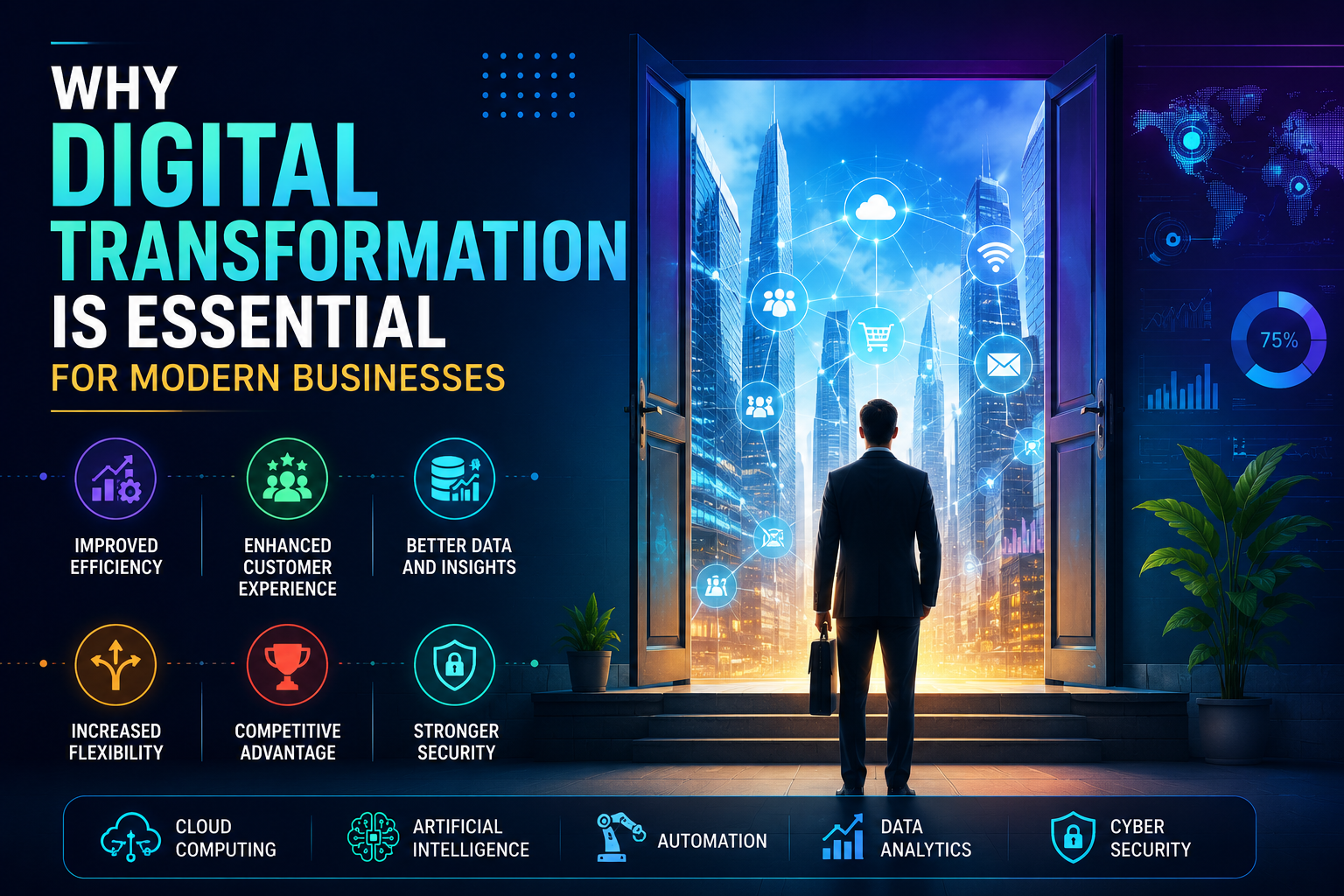
Digital transformation has become one of the most important strategies for businesses in today’s competitive world. Companies across industries are using digital technologies to improve operations, enhance customer experiences, and increase efficiency. From cloud computing and artificial intelligence to automation and data analytics, digital tools are helping organizations adapt to rapidly changing market conditions.
In 2026, businesses that fail to embrace digital transformation risk falling behind competitors who are using technology to improve productivity and innovation.
Understanding Digital Transformation
Digital transformation refers to the integration of digital technologies into various aspects of a business. It involves changing traditional processes and adopting modern technological solutions to improve efficiency and decision-making.
Businesses are now using digital systems for communication, customer service, marketing, financial management, and data analysis. These technologies help organizations operate more effectively in a fast-changing digital economy.
Improved Operational Efficiency
One of the biggest benefits of digital transformation is improved efficiency. Automation tools and digital platforms reduce manual tasks and streamline business operations. Companies can manage workflows, track performance, and process information more quickly.
Cloud-based systems also allow employees to collaborate from different locations, improving communication and productivity across teams.
Enhanced Customer Experience
Modern customers expect fast, convenient, and personalized services. Digital transformation allows businesses to better understand customer behavior through data analytics and online interactions.
Companies can improve customer support through chatbots, mobile apps, and digital communication channels. Personalized recommendations and faster response times help businesses build stronger customer relationships.
Better Data and Decision-Making
Digital technologies provide businesses with access to valuable data and insights. Companies can analyze customer preferences, market trends, and operational performance in real time.
Artificial Intelligence and data analytics tools help organizations make more informed decisions, reduce risks, and identify growth opportunities.
Increased Business Flexibility
Digital transformation helps businesses adapt quickly to market changes and unexpected challenges. Companies using cloud computing and digital platforms can scale operations more efficiently and respond faster to customer demands.
Flexible digital systems also support remote work and global business expansion.
Competitive Advantage
Businesses that invest in digital transformation often gain a competitive edge. Modern technologies improve innovation, reduce operational costs, and help companies deliver products and services more effectively.
Organizations that embrace digital strategies are better positioned to compete in both local and international markets.
Cybersecurity and Digital Protection
As businesses become more digital, cybersecurity becomes increasingly important. Companies must protect sensitive customer and business data from cyber threats and data breaches.
Digital transformation includes implementing advanced cybersecurity measures such as encryption, multi-factor authentication, and secure cloud systems.
Industries Benefiting from Digital Transformation
Digital transformation is impacting nearly every industry.
Healthcare organizations use digital systems for patient management and telemedicine.
Retail businesses use e-commerce platforms and personalized marketing tools.
Financial institutions use digital banking and AI-powered fraud detection systems.
Manufacturing companies use automation and smart technologies to improve production efficiency.
Challenges of Digital Transformation
Although digital transformation offers many benefits, businesses may also face challenges. Implementing new technologies requires investment, employee training, and strategic planning. Some organizations may struggle with adapting to rapid technological change.
However, companies that successfully manage digital transformation often achieve long-term growth and improved business performance.
Conclusion
Digital transformation is no longer optional for modern businesses. Companies that adopt digital technologies can improve efficiency, enhance customer experiences, and remain competitive in an increasingly technology-driven world. From automation and cloud computing to Artificial Intelligence and data analytics, digital transformation continues to shape the future of global business operations.
FAQs
- What is digital transformation?
Digital transformation is the process of integrating digital technologies into business operations to improve efficiency and innovation. - Why is digital transformation important for businesses?
It helps companies improve productivity, customer experience, decision-making, and competitiveness. - Which technologies are commonly used in digital transformation?
Common technologies include cloud computing, Artificial Intelligence, automation, data analytics, and cybersecurity systems. - Can small businesses benefit from digital transformation?
Yes, small businesses can improve efficiency, reduce costs, and compete more effectively by using digital technologies.




Be First to Comment